What's Really Going on with Your Picky Toddler and How to Gently Help
Tonight you plated the pasta your child asked for in the right shape, with extra cheese, and no sauce touching the edges. They look at it, push it away, and announce they aren't hungry.
You hold it together and suggest they take three bites, to which they respond "no." You suggest one bite. Still no.
Now let's rewind about 140 years. In 1885, a typical American family meal might have been pig's feet with beans, or sausage with dried pumpkins.
And for dessert? Apple pie or bread soaked in milk. And if there was no milk, sweetened water, of course.
If you were on a tight budget, you might have followed Juliet Corson's famous Twenty-Five Cent Dinners for Families of Six and served baked beef heart.
Now picture your kid at that table.

It might be hard to imagine them stomaching those meals no matter how hungry they said they were. The thing is, back then, they probably would have eaten it, because that was dinner and there was nothing else.
According to historian Helen Zoe Veit, author of Picky: How American Children Became the Fussiest Eaters in History, kids back then spent their allowances on raw oysters and ate spicy relishes and bitter greens alongside their parents without much fuss. The idea that children are naturally picky is a cultural invention less than a century old, which means it's not permanent, not inevitable, and not your fault.
If this scene plays out at your house multiple nights a week, you're not alone. And no, you're not doing anything wrong either.

First, the Number That Matters Most
Research puts picky eating somewhere between 13 and 50% of toddlers, with the hardest stretch landing squarely between ages 2 and 6. A 2023 population-based study found that 22% of children were classified as picky eaters by age 5, a nearly 10% increase from when they were age 2.
Which means chaos at the table is more common than you think.

Why Toddlers Become Picky Eaters
Here's the thing—most picky eating isn't defiance. It's biology, development, and a very depleted 4-year-old. Understanding the "why" doesn't fix dinner, but it can take a lot of the weight off your shoulders.
1. Pickiness is newer than you think, but the fear of new food is real.
Veit's research shows that for most of human history, children were seen as joyful omnivores. Parents assumed kids could eat what adults ate, and they almost always did. The idea that children need special, plain, separate "kids food" only took hold in the early 20th century, driven by well-meaning nutritionists and, later, the processed food industry.
That said, "food neophobia,” the instinctive wariness of unfamiliar foods, is a real developmental phenomenon that peaks between ages 2 and 6.
Research shows it increases precisely as children become more mobile and independent, acting as an ancient protective instinct against accidentally eating something poisonous. Your toddler's suspicion of that "weird green thing" has deep evolutionary roots. The hopeful part, as Veit's research shows, is that the fear of new foods ebbs with repeated exposure to those foods. Kids who keep encountering a wide variety of foods from an early age learn to love them. The history of literally every generation before ours proves it.
2. The dinner table is one of the few places they have real power.
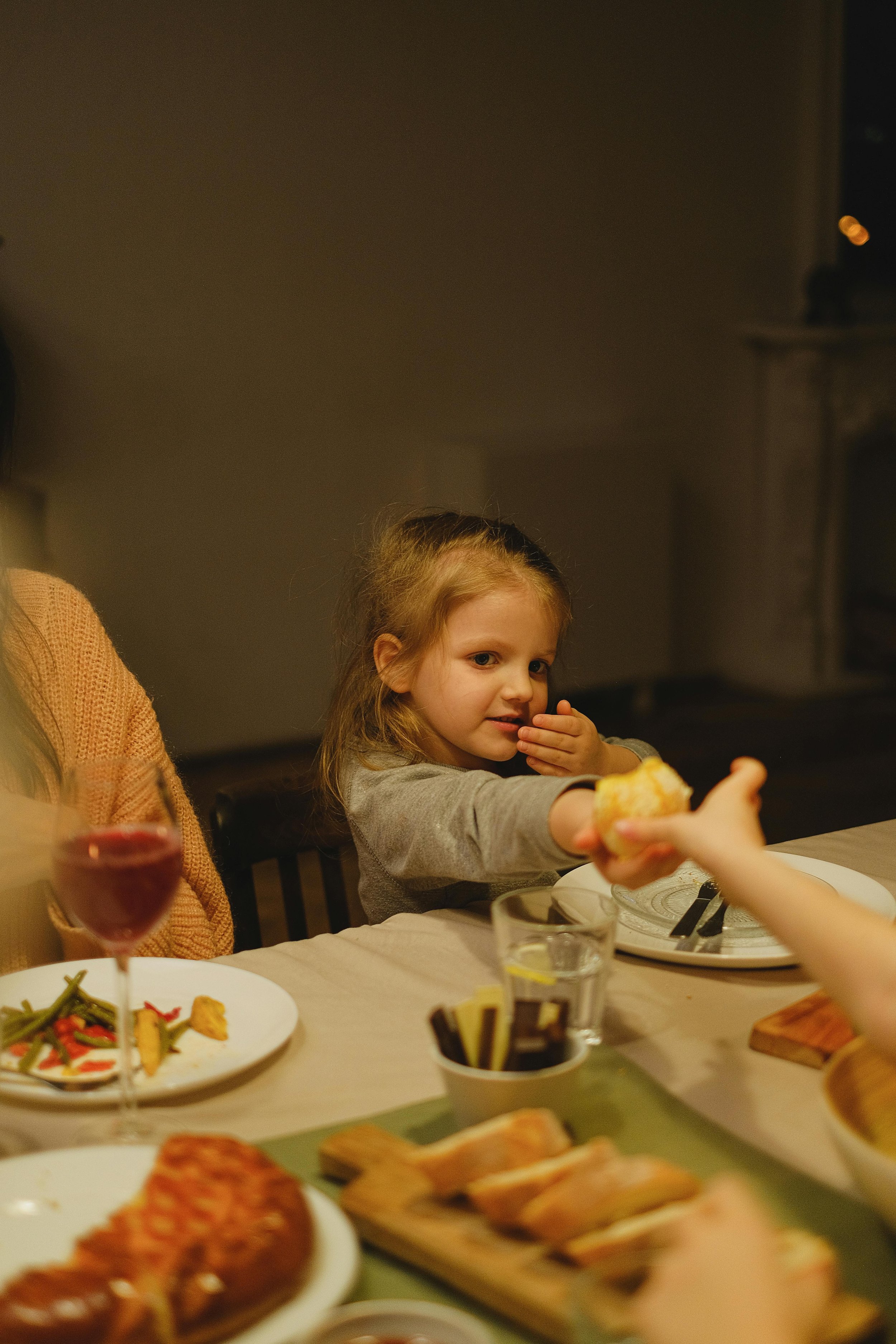
Between ages 2 and 4, toddlers are actively developing a sense of self. They can't choose their nap time or whether to get dressed, but they can decide whether or not to eat asparagus. They’re not trying to manipulate you—instead, they want to feel like they’re in control of some parts of their lives.
3. Their tastebuds are more sensitive than yours.
Children are born with roughly 3x more taste buds than adults (so cool, right?). Maybe that explains why our little ones run from anything spicy. In addition, they're significantly more sensitive to bitter compounds, which are exactly the kind found in vegetables like broccoli, kale, and brussels sprouts. What tastes mild to you can taste sharp or overwhelming to a small child. So next time they put on a drama show to eat their veggies, you can understand that it’s rooted in some legitimacy.
4. For many kids, texture is a bigger trigger than flavor.
Food sensory sensitivity is common in early childhood, and certain mushy, slimy, and lumpy textures can trigger an aversion response. If your child tolerates crunchy foods more consistently than soft ones, this might be part of what's happening.
5. Dinnertime is when they're running on empty.
By 6pm, most toddlers have hit their sensory and cognitive limit for the day. What looks like being difficult at dinner is often just a thoroughly depleted nervous system.

What Tends to Make It Harder
Most parents have tried all of these at some point because most of these feel like they should work. And while they sometimes do, they’re not viable long-term solutions.
Pressure to finish the plate.
Feeding researcher Ellyn Satter consistently found that pressure at the table increases food avoidance, not compliance. When eating feels like a performance or a test, kids disengage.
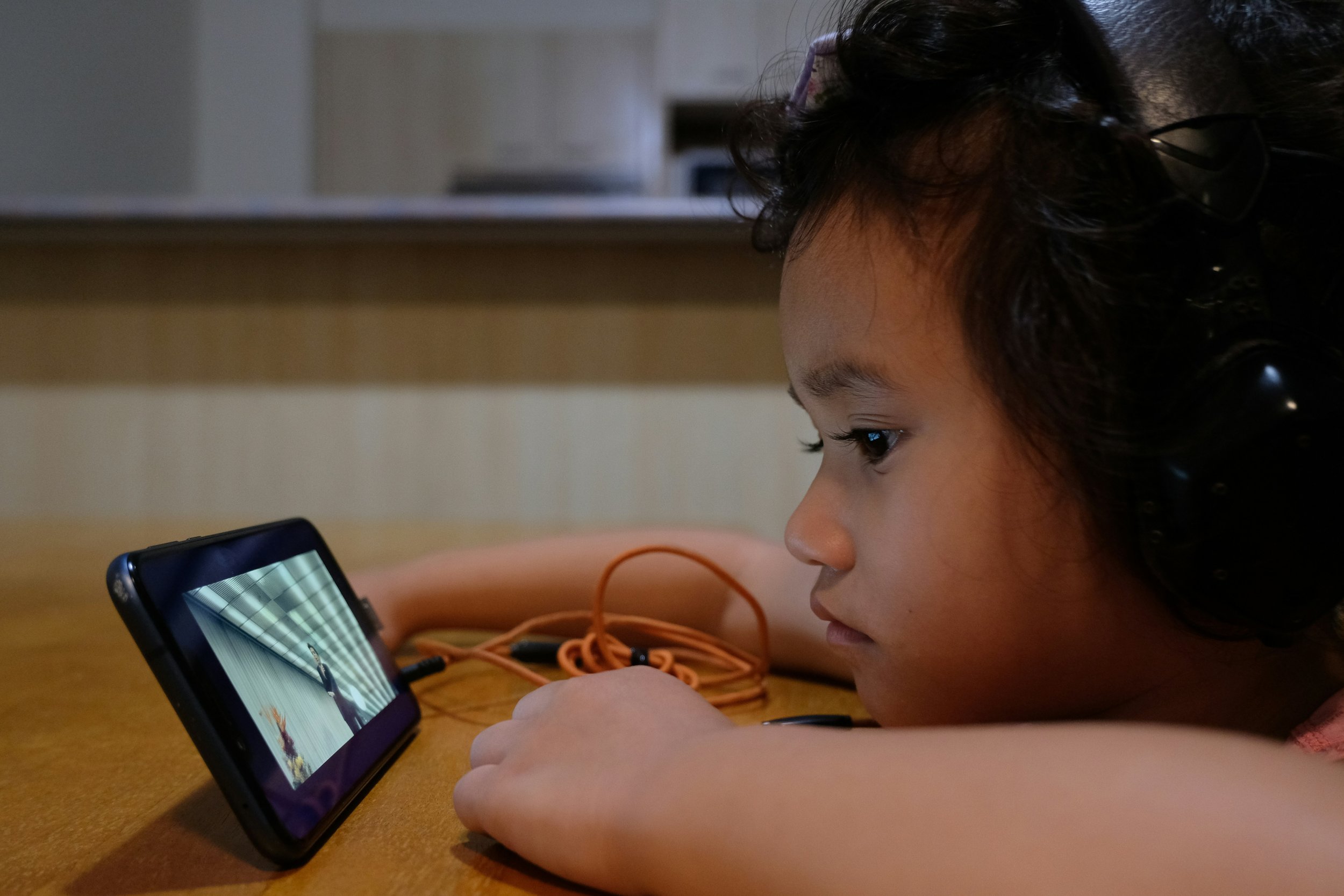
Rewarding with screens or dessert.
This can work in the short term. But it trains kids to experience the meal itself as an obstacle to get through, rather than something worth engaging with.
The "sneak it in" approach.
Hiding vegetables bypasses the slower, more important work of helping kids build a real relationship with food and tends to backfire the moment they notice.
Again—none of this makes you a bad parent. Knowing these strategies tend to increase resistance over time gives you permission to try something different.
Gentle Resets That Actually Help
These aren't quick fixes. The goal is to lower the emotional temperature at mealtime, because kids who feel safe at the table are more likely to be curious about what's on it.
Reset 1: Separate "sitting at the table" from "eating everything."
A toddler who sits down, tries something once, and stays at the table for 15 minutes has had a successful mealtime, even if the plate isn't empty. Two bites and staying seated can count as a win. Reframe what progress actually looks like.
Reset 2: Keep offering, without pressure.
Research suggests children may need to encounter a new food 10 to 15 times before accepting it. The key word is encounter, not force. Some pediatricians have found that even the most resistant kids will come around with enough calm, repeated exposure—smelling it, touching it, watching others eat it—long before they actually try it. Familiarity, over time, does its quiet work.
Reset 3: Give them some control.
"Do you want your peas in a bowl or on the plate?"
Small choices feel very different from orders and reduce the power-struggle dynamic significantly. Kids eat better when they feel like participants in the meal, not subjects of it.
Reset 4: Celebrate trying, not finishing.
A child who takes one bite of something new and spits it out has still done something brave. Acknowledging that warmly, without over-dramatizing, builds confidence and curiosity over time.
Reset 5: Let the table be a good place to be.
Sometimes the win is that everyone sat down together, someone laughed, and nobody cried. Veit's research found that parental confidence at the table—the quiet, genuine belief that your child is capable of eating well—matters more than any single strategy. Kids pick up on it. Connection and calm are what build the long-term habit of showing up for meals at all.
Reset 6: Give them something to eat toward, not just eat.
Kids are surprisingly logical. When something makes sense to them, they're more willing to try it, and food is no different.
Instead of "just take a bite," try giving them a reason that helps them understand the reason behind why trying new food is important for their bodies. Carrots help your eyes stay healthy. Protein makes muscles grow. Eating a variety of foods gives your body everything it needs to keep up with you.
Sometimes the reason doesn't need to be nutritional at all. Trying a new food is one of the coolest ways to explore the world. Every culture has its own flavors, ingredients, and traditions, and when you taste something new, you're experience a part of that. It turns what might feel like a chore into an adventure for your little ones. That's exactly what YumLit was built to do—bring the magic back to mealtime.
How YumLit Fits into This
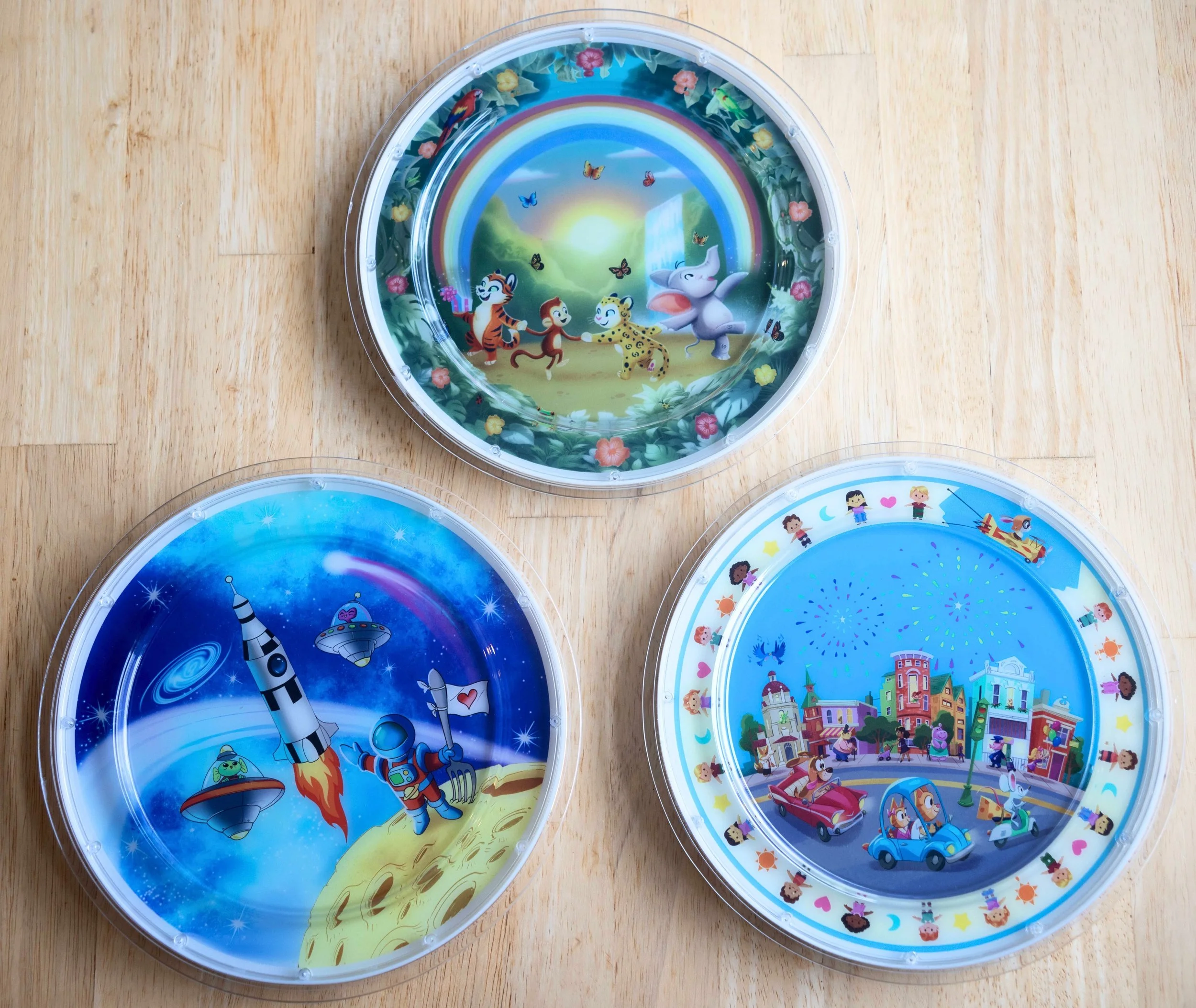
We built YumLit around a simple idea: when we make mealtime more fun and enjoyable, studies show that kids eat better, have better nutrition, and develop a better long-term relationship with food.
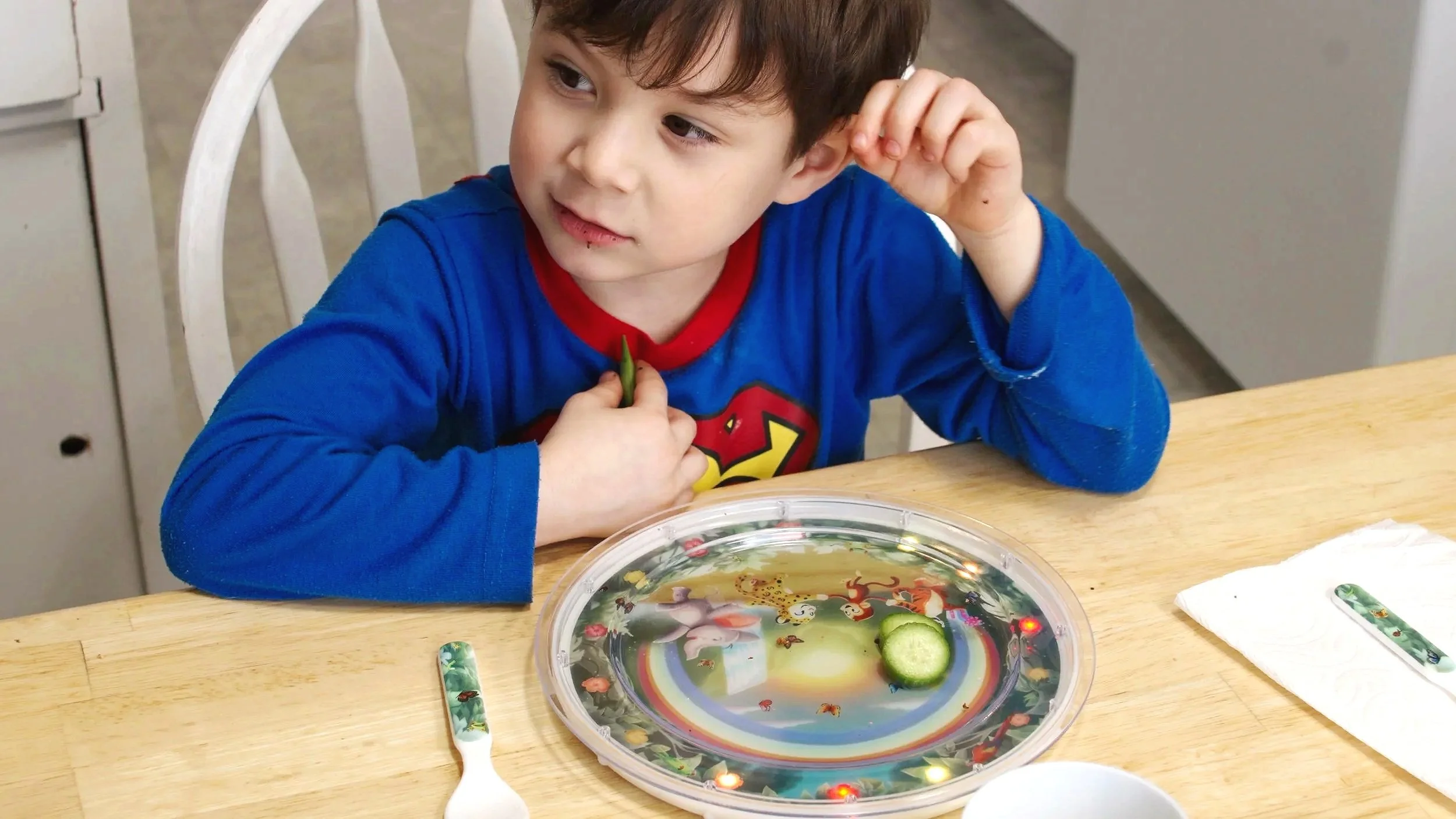
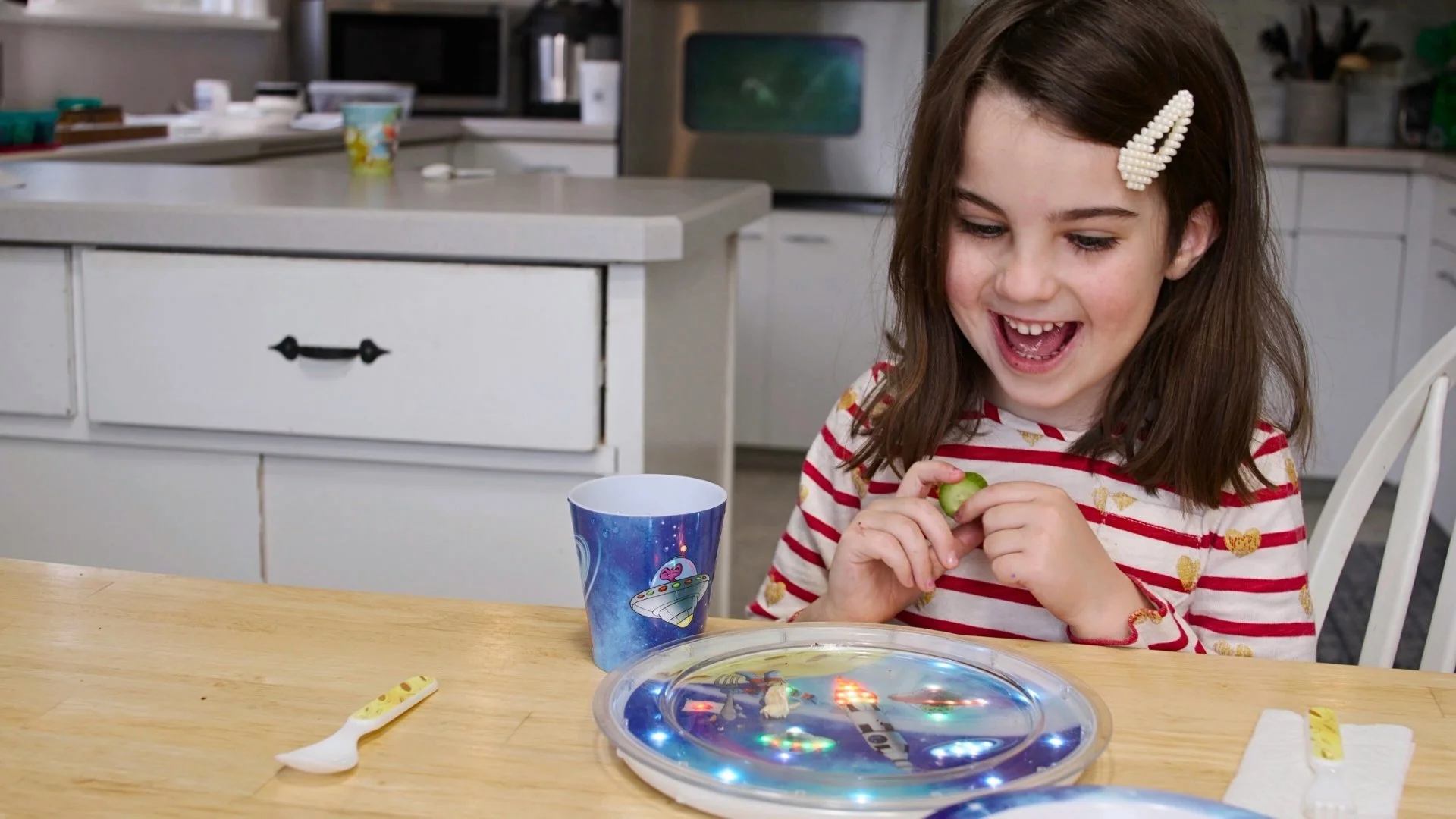
The YumLit plate uses gentle rim lights that activate one at a time as kids eat, building anticipation bite by bite. When the plate is cleared, a quiet celebratory light show appears.
The goal doesn't have to be a clean plate. It can start much smaller—try one bite, and the next light turns on. Progress over perfection. Every bite brings light.
We’re not claiming that YumLit cures picky eating. Nothing does, instantly. But it helps shift the emotional tone at the table from pressure to play, and that shift, sustained over time, is what gives kids the safety to become more curious about food.
When to Get Extra Support
For most toddlers, selective eating is a phase that gradually eases with consistency and low-pressure exposure. But consider reaching out to your pediatrician or a pediatric occupational therapist if your child consistently limits themselves to fewer than 20 foods, gags or vomits regularly when presented with new foods, isn't gaining weight appropriately, or shows signs of extreme distress around mealtimes.
Pediatric feeding therapy can be genuinely transformative. It's another form of support, and there's no shame in asking for it.
You're Doing Better Than You Think
The fact that you're reading something like this means you care. And that alone should be celebrated!
Picky eating, mealtime battles, and exhaustion are all normal. And little by little, with one calm dinner at a time, things do get easier.
YumLit® is a parent-founded brand on a mission to make mealtime more joyful for families — and to fight child hunger for families who need it most. Every plate sold donates $1 to organizations combating food insecurity in the U.S. and globally. Join our early-bird waitlist and get 35% off our launch pricing.